06.11.25
What to Do When You’ve Been Outed Without Your Consent
Last Updated 14.10.25
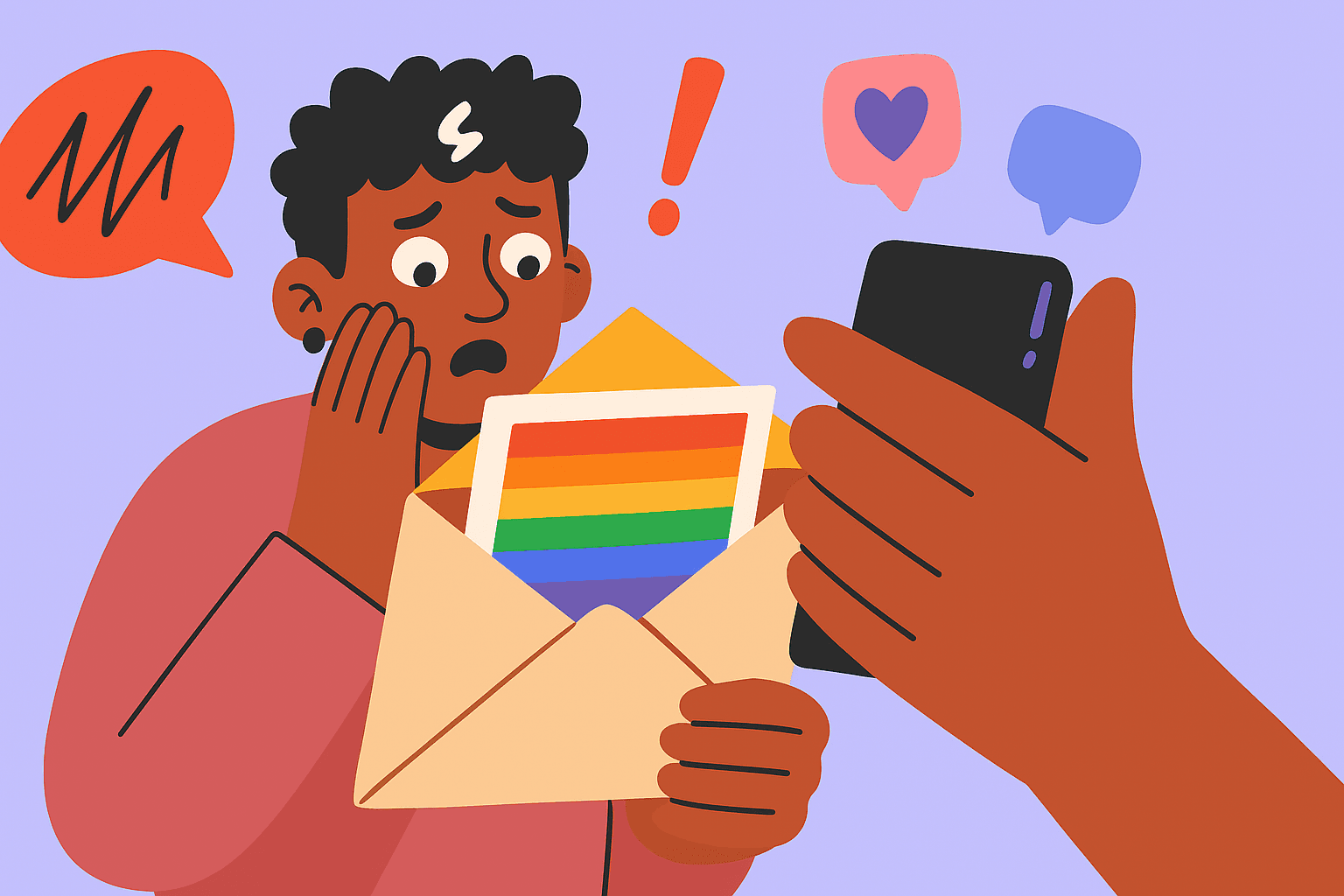
Someone just told people about your sexuality or gender identity without asking you first. Your phone is blowing up, or your family is sitting you down for “a talk,” or your coworkers are suddenly acting weird. The ground feels like it’s disappeared from under your feet.
Let’s be clear about one thing from the start: this is not the same as coming out. Coming out is a choice you make about your own life, on your own timeline. Outing is when someone else makes that choice for you – and it’s a violation, full stop. It doesn’t matter if they thought they were helping, if they were angry, or if they “didn’t think it was a big deal.” Your identity, your information, your timeline. Not theirs.
Now you’re here, reading this, probably feeling a mix of rage, panic, betrayal, or numbness. All of those are valid. But right now, we need to talk about what comes next.
First Priority: Check Your Safety
Before you do anything else, you need to assess whether you’re physically and practically safe. This isn’t about being dramatic – it’s about being realistic. Some people live in contexts where being outed can mean losing their home, their job, or facing violence.
Ask yourself these questions:
Housing: Are you financially dependent on someone who now knows? Do you live with family members who might react badly? Could you be kicked out? If there’s even a chance of this, start making a backup plan now. Reach out to friends who might let you crash, look up LGBTQ+ youth housing resources if you’re under 25, or identify a safe space you can go to quickly.
Financial: Do you rely on someone for money who might cut you off? Do you have access to your own bank account that no one else controls? If your financial situation is precarious, secure your funds. Open a separate account if you need to, or make sure you have access to emergency cash.
Physical Safety: Is there a risk of violence? This isn’t just about strangers – family members and partners can be dangerous when they feel their worldview is threatened. Trust your gut. If something feels off, don’t stick around to see if you’re right.
Documentation: If you’re in a situation where you might need to leave quickly, make sure you have copies of important documents – ID, passport, birth certificate, medical records. Digital copies stored in a secure cloud account can be a lifesaver.
If you’re genuinely unsafe, your first move is not to confront anyone or try to control the narrative. Your first move is to get somewhere secure. Everything else can wait.
The Emotional Tornado
You’re probably feeling like shit right now, and that’s not going to disappear because someone tells you to “stay positive.” Let’s talk about what you’re actually experiencing.
Betrayal is usually the big one. Someone you trusted – or maybe someone you didn’t, which is its own kind of violation – just took something deeply personal and shared it without permission. That’s a fundamental breach of trust, and it’s okay to be furious about it.
Shame might show up too, even though logically you know you have nothing to be ashamed of. Shame is sneaky like that. It’s not about whether being LGBTQ+ is actually wrong – it’s about suddenly feeling exposed, vulnerable, like everyone’s looking at you and judging.
Loss of control is the other major player. You had a plan, or at least the option of a plan, and now someone else has yanked the steering wheel out of your hands. That feeling of powerlessness can be overwhelming.
Here’s what helps: let yourself feel this stuff. Don’t try to logic your way out of anger or talk yourself out of grief. You can be pissed and scared and sad all at once. Emotions don’t need to make sense or be productive – they just need to be felt.
What doesn’t help: isolating completely, turning to substances to numb out, or making huge life decisions in the first 48 hours when you’re in crisis mode. Give yourself a minute to stabilize before you decide to, say, quit your job or cut off your entire family.
If you have access to a therapist, especially one who specializes in LGBTQ+ issues, now would be a good time to book an emergency session. If you don’t, crisis lines exist specifically for this – The Trevor Project, LGBT National Help Center, and others have counselors who’ve heard this story before and can help you sort through it.
Talking to People Who Now Know
So people know. Now what? How you handle this depends entirely on who these people are and what kind of relationship you want with them going forward.
For people you care about and want to keep in your life:
You don’t owe anyone an explanation, but if you want to maintain the relationship, you’ll probably need to have some conversations. Here’s a framework:
Set the boundary first: “I want to talk about this, but I need you to understand that I’m hurt/angry that I didn’t get to share this myself on my own terms.” Make it clear that the method matters, not just the information.
Answer only what you’re comfortable with. If someone asks intrusive questions about your sex life or transition plans or whatever, you can absolutely say, “That’s not something I’m discussing.” People who care about you will respect that.
Watch for who apologizes for the outing itself versus who treats it like you’re the one who needs to explain yourself. The former are worth keeping; the latter are showing you who they are.
For people you don’t trust or don’t care about:
You actually don’t have to engage at all. If coworkers are being weird, you can decide whether to address it directly (“Yeah, I’m gay, and?”) or just… continue with your life and let them sit with their awkwardness. Sometimes the power move is refusing to treat it as a dramatic revelation.
For the person who outed you:
This is tough because you’re probably feeling a lot of rage toward this person. Whether you confront them depends on whether it’s safe and whether it will actually help you feel better. Some people need to hear exactly how much damage they caused. Others aren’t worth the energy.
If you do confront them, keep it simple: “You shared private information about me without my consent. That was a violation of my trust and my privacy. I need you to [specific action: stop spreading information, apologize to people you told, give me space, etc.].”
What you do next – whether you maintain the relationship, end it, or put it on hold – is entirely your call.
Legal and Social Realities
Let’s talk about rights and protections, because the answer to “what can I do legally?” is frustratingly complicated.
Employment: In many places (including the US under federal law as of the Bostock decision), you’re protected from employment discrimination based on sexual orientation and gender identity. If you’re fired or harassed at work because someone outed you, that’s potentially illegal. Document everything – emails, texts, who said what and when.
However, protections vary wildly by location. Some countries and US states have strong anti-discrimination laws; others have none. Some have exceptions for religious organizations or small businesses. Know what applies where you are.
Housing: Similar story. Federal Fair Housing Act protections in the US now extend to LGBTQ+ people, but enforcement is patchy and many landlords will find other excuses.
Privacy laws: Here’s the frustrating part – in most places, there’s no specific law against outing someone. It’s not illegal to share true information about another person, even if it’s deeply private. There are narrow exceptions (revenge porn laws, HIPAA violations if medical providers are involved, potential defamation cases if false information is spread), but generally speaking, the person who outed you probably didn’t break any laws.
That doesn’t make it okay. It just means your recourse is social, not legal.
School protections: If you’re a student, Title IX protections may apply, especially if the outing leads to harassment or if school officials are involved. Schools have a responsibility to provide a safe environment, and that includes protecting students from harassment based on sexual orientation and gender identity.
Documentation: If you’re experiencing harassment, discrimination, or threats following your outing, document everything. Screenshots, written records of conversations, witness names. Even if you don’t pursue legal action, having a paper trail can be protective.
You Still Control Your Story
Here’s what nobody can take away from you: your outing doesn’t define your coming out. Someone else jumped the gun, but they don’t get to write the whole narrative.
You get to decide what happens next. You can be as out or as private as you want going forward. You can share your story with some people and not others. You can take time to figure out how you want to talk about yourself before you owe anyone explanations.
Some practical steps for reclaiming control:
Build your support system: Find people who are solidly in your corner. This might be LGBTQ+ friends, supportive family members, or community groups. You need people who will remind you that you’re not alone and that this situation doesn’t define you.
Control the information flow: If rumors are spreading, you can decide whether to address them head-on or let them die down. Sometimes making a clear, brief statement (“Yes, I’m [identity], and I’d appreciate privacy as I navigate this”) shuts down gossip faster than staying silent.
Seek out LGBTQ+ community: Whether that’s online spaces, local community centers, or just finding one friend who gets it – connecting with people who’ve been through similar experiences helps. They’ll have practical advice and they’ll also remind you that life continues after outing.
Give yourself time: You don’t have to have everything figured out right now. It’s okay if your feelings about this shift over days and weeks. It’s okay if you need to retreat for a while before you’re ready to be more open. Your timeline, your rules.
Consider therapy: Specifically, find a therapist who’s LGBTQ+-affirming and who understands trauma. Outing can be legitimately traumatic, especially if it’s tied to other violations of safety or trust. Processing that with a professional can help prevent it from becoming a wound that festers.
Moving Forward
Here’s the hard truth: being outed sucks, and some consequences might stick around for a while. Some relationships might not recover. Some situations might get worse before they get better.
But here’s the other truth: thousands of people have been outed against their will and have built lives they love anyway. This moment doesn’t determine your entire future. It’s a chapter, probably a painful one, but it’s not the whole book.
You’re going to have days where this feels manageable and days where it feels crushing. Both are normal. Healing isn’t linear, and you don’t have to be strong all the time.
What matters is that you’re making choices now – about who to trust, where to invest your energy, what boundaries to set. Someone took choice away from you, and you’re taking it back. That counts for something.
You’re still you. Your identity hasn’t changed – just who knows about it. And ultimately, that’s information, not identity. The core of who you are, what you value, who you love – that’s still entirely yours.
Take care of yourself. Be strategic about your safety. Let yourself feel everything. And remember: you get to decide what comes next.

Michael Chen
Michael Chen completed his Ph.D. in Gender Studies at Yale University and now leads transgender health initiatives at Boston Medical Center. His research on gender identity development has been featured in leading medical journals and informed policy development for transgender healthcare access. Dr. Chen draws from his academic expertise to create educational content that promotes understanding of diverse gender expressions and identities.