06.11.25
How to Navigate LGBTQ+ Content on Social Media When Safety Is a Concern
Last Updated 14.10.25
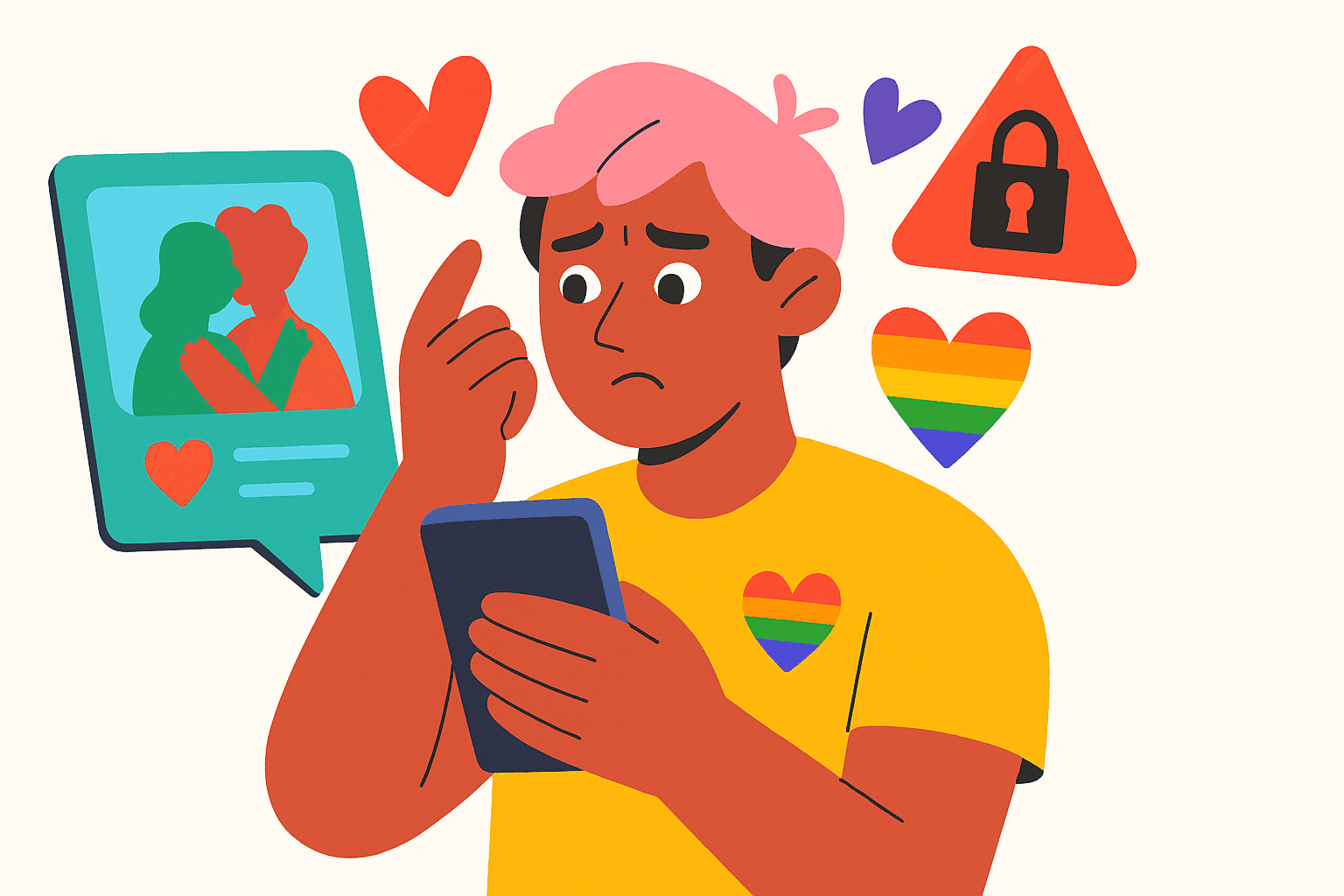
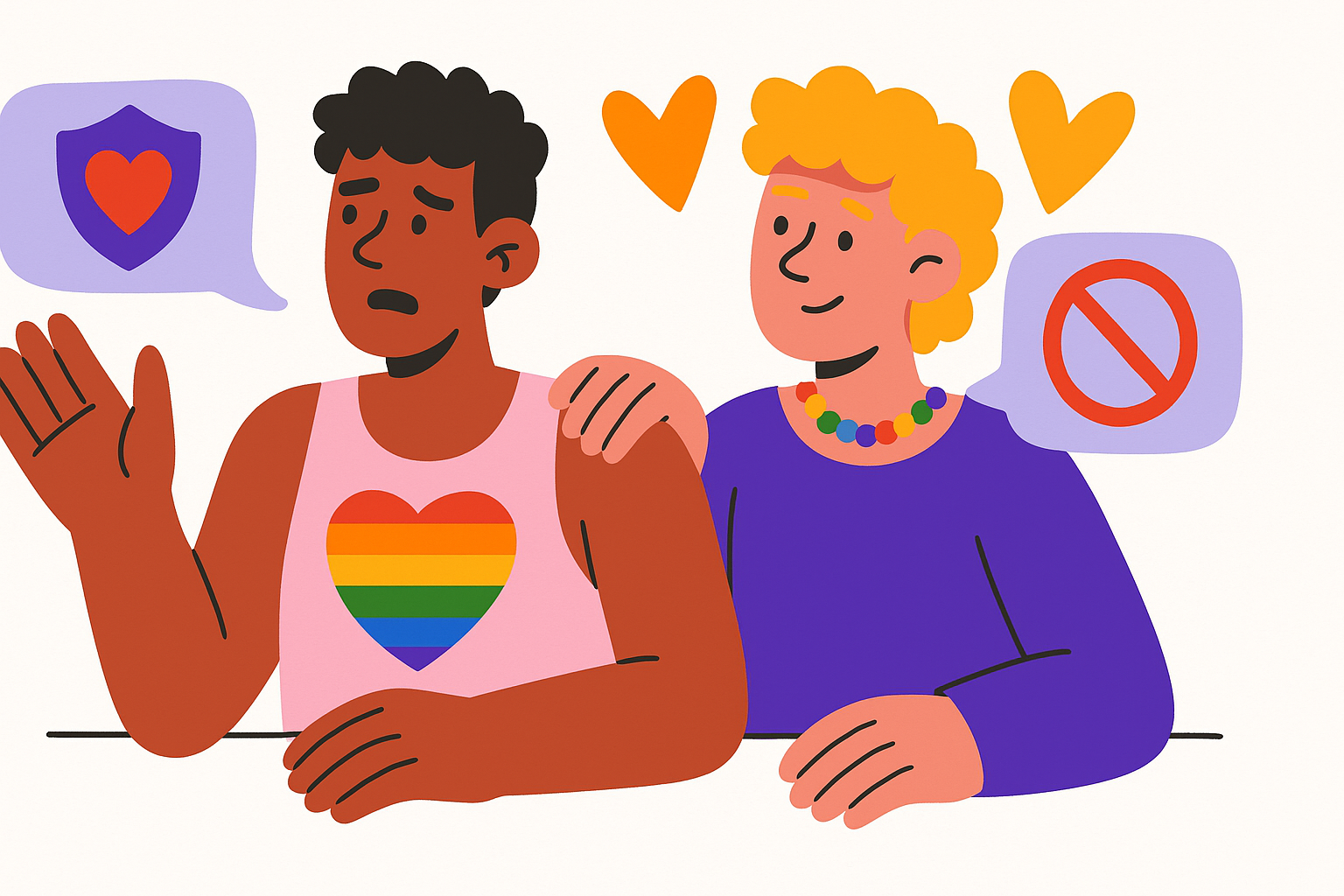
Let’s get real: for some people, posting a Pride flag emoji is a non-event. For others, it’s a calculated risk. Maybe you’re living somewhere with anti-LGBTQ+ laws. Maybe your family checks your Instagram daily. Maybe your employer is the type to “quietly let you go” if they find out. Social media is how we connect, find community, and express ourselves – but it can also expose us to harassment, discrimination, or worse.
This isn’t about living in fear or staying silent. It’s about being smart. You deserve to exist online, to find your people, to share your life. But you also deserve to do it without putting yourself in danger. So let’s talk about how to manage LGBTQ+ content on social media when the stakes are higher than they should be.
Know Your Risk Level (Because Context Matters)
Before you adjust a single privacy setting, take stock of your actual situation. Not everyone faces the same risks, and understanding yours helps you make informed choices.
Legal landscape: Are you in a country where same-sex relationships are criminalized? Where “propaganda” laws exist? Check local laws – organizations like ILGA World maintain updated maps of LGBTQ+ rights globally. If your country criminalizes queer identities, your digital footprint carries legal risk.
Family dynamics: Do you live with family who would react badly? Are you financially dependent on parents who monitor your phone? If discovery could mean being kicked out, losing financial support, or facing violence, your risk level is high.
Employment situation: Does your workplace have non-discrimination protections? Are you in a conservative industry or religious organization? In many places, you can legally be fired for being LGBTQ+. If your job is on the line, that’s a real risk factor.
Physical location: Do your neighbors know where you live? Could someone connect your online presence to your home address? Physical safety isn’t just about laws – it’s about who can find you.
Write this down if it helps: What’s the worst realistic outcome if someone sees your LGBTQ+ content? That answer guides every decision that follows.
Lock Down Your Privacy Settings (The Boring But Essential Part)
Privacy settings are your first line of defense. Most people never touch them. You’re not most people.
Instagram:
- Set your account to private (only approved followers see your posts)
- Turn off activity status so people can’t see when you’re online
- Disable location services in your phone settings for the Instagram app
- Remove geotags from existing posts
- Hide your story from specific people (family members, coworkers)
- Turn off “Allow others to share your posts to their stories”
- Review tagged photos and approve tags manually
Twitter/X:
- Protect your tweets (makes your account private)
- Turn off photo tagging
- Disable location information
- Review and remove followers regularly
- Use Twitter lists privately to organize accounts without following publicly
Facebook:
- Limit past posts (changes all previous public posts to friends-only)
- Review tagged posts before they appear on your timeline
- Customize who can see your friends list (set to “Only me”)
- Turn off facial recognition
- Check “View As” to see what different people see on your profile
- Create custom friend lists and post only to specific groups
TikTok:
- Set account to private
- Disable duets and stitches
- Turn off comments or limit them to friends
- Don’t use your real name
- Disable the “suggest your account to others” option
Do this now. Seriously, put down your phone and go through these settings. It takes twenty minutes and could save you months of headaches.
The Double Life: Managing Multiple Accounts
Many LGBTQ+ people run two accounts: one “clean” account for family/work, and one authentic account for community. It’s not ideal, but it works.
Setting up a secondary account:
- Use a different email address (create one specifically for this)
- Choose a username with no connection to your real name
- Don’t use the same profile photo
- Don’t follow family, coworkers, or anyone from your “regular” life immediately
- Be careful about algorithmic connections – if you use the same device, platforms may suggest your accounts to mutual contacts
Keeping them separate:
- Use different browsers or browser profiles for each account
- Log out completely when switching
- Don’t save passwords where others can access them
- Disable “suggested accounts” notifications
- Never cross-post between accounts
The finsta approach: Some people keep their main account relatively neutral and create a “finsta” (fake Instagram) or private Twitter for LGBTQ+ content. Your main account shows your socially acceptable life. Your private account is where you’re actually yourself. It’s exhausting, yes. But for many, it’s necessary.
Secure Platforms and Messaging Apps
Not all platforms are equally safe. Some have better encryption, some are more anonymous, some are just harder for people to casually stumble onto.
Signal: End-to-end encrypted messaging. Messages disappear if you set them to. No data harvesting. If you’re discussing anything sensitive – coming out plans, dating, events – use Signal. It’s free and works like any other messaging app.
Telegram: More features than Signal, secret chats are encrypted, large group capacity. Good for community organizing. Public channels can be risky though – they’re searchable.
Discord: Useful for LGBTQ+ communities, especially gaming or hobby-based groups. Servers can be private. Username isn’t tied to your phone number. You can be completely anonymous if you want.
Avoid: Regular SMS, Facebook Messenger, Instagram DMs for sensitive conversations. They’re not encrypted end-to-end and can be accessed by the companies or authorities.
VPNs matter: If you’re in a country with internet surveillance, use a reputable VPN (Virtual Private Network). NordVPN, ProtonVPN, and Mullvad are solid options. Free VPNs often sell your data, so avoid them for anything sensitive.
What to Post (and What to Keep Private)
This is where it gets tricky because the answer is personal. But here are some guidelines:
Think twice before posting:
- Your face in clearly queer contexts (if you’re not out)
- Geolocation tags, especially at LGBTQ+ venues or events
- Information about your workplace, school name, or specific location
- Photos of your home’s interior or exterior (people can identify locations from backgrounds)
- Relationship status changes (if your partner isn’t out or if it puts either of you at risk)
- Event check-ins at Pride or LGBTQ+ gatherings
Safer options:
- Text-based content without identifying details
- Memes and shared posts (less personal, harder to use against you)
- Art, music, or media recommendations
- General support statements without personal revelations
- Content shared to close friends lists only
The metadata problem: Even if you don’t manually add location, photos contain EXIF data with GPS coordinates. Strip this before posting. On iPhone, you can turn off location access for your camera app. On Android, similar settings exist. Apps like Scrambled Exif (Android) or Metapho (iOS) can remove metadata from existing photos.
Dealing with Hate and Online Harassment
You can do everything right and still attract harassment. Here’s how to handle it:
Immediate actions:
- Block without engaging (don’t feed trolls)
- Report to the platform (use specific terms like “hate speech” or “targeted harassment”)
- Screenshot evidence before blocking (keep records with timestamps)
- Don’t delete your posts unless they put you in danger – removing content sometimes emboldens harassers
When it escalates:
- Document everything: screenshots, usernames, dates, times
- Check if threats are criminal in your jurisdiction (specific threats of violence often are)
- Contact local LGBTQ+ organizations for support
- If you’re in physical danger, contact police (though quality of response varies)
- Consider temporarily deactivating accounts if harassment becomes overwhelming
Platform-specific reporting:
- Instagram: Report individual posts and profiles, use “It’s inappropriate” > “Hate speech or symbols”
- Twitter: Report tweets and accounts, use “It’s abusive or harmful”
- Facebook: Report posts, comments, and profiles through their Help Center
- TikTok: Long-press on comments to report, report videos and accounts through their reporting system
Don’t suffer alone: Tell friends, contact support groups, talk to people who get it. Online harassment is real harassment, and it takes a toll.
Digital Safety Resources (Real Organizations That Actually Help)
For digital security:
- Electronic Frontier Foundation (EFF): Guides on protecting privacy online, surveillance self-defense
- Access Now Digital Security Helpline: Free 24/7 support in multiple languages
- The Tor Project: Anonymous browsing when you need it
LGBTQ+-specific resources:
- Rainbow Railroad: Helps LGBTQ+ people escape persecution (if you’re in crisis)
- ILGA World: Tracks legal status globally, knows which countries are risky
- The Trevor Project (US): Crisis support, including chat-based help
- LGBT Foundation (UK): Digital safety guides specifically for queer people
Platform guides:
- Each major social media platform has a safety center with updated guides
- Search “[platform name] safety center” for official resources
These organizations exist because these problems are real and common. You’re not paranoid for needing them.
Conclusion: Visibility Is a Privilege, But You Can Create Your Own Safe Space
Here’s the truth: being openly LGBTQ+ online shouldn’t require a safety manual. But it does, for many of us. And that sucks.
You might feel torn between wanting to be visible, to be part of the community, to help others feel less alone – and needing to protect yourself. That’s legitimate. Both needs are valid. You’re not a coward for prioritizing safety. You’re not reckless for wanting to exist authentically online.
The goal isn’t paranoia. It’s informed risk-taking. Check your privacy settings regularly (platforms update them, often making them more permissive without telling you). Review who can see your content. Think about what you’re sharing and who might see it. Use tools that give you control. Build community in spaces designed to be safe.
Share what you can safely share. Keep private what needs to stay private. Find your people in encrypted spaces if public ones are too risky. Your safety comes first, always.
The community will still be here, in whatever space you can safely occupy. And when things change – when you move, when you’re financially independent, when laws shift, when circumstances allow – you can be as loud and proud as you want to be. Until then, be strategic. Be careful. Be here.
Because you deserve to exist online, even if you have to be more careful about how.

Morgan Taylor
Morgan Taylor holds a Ph.D. in Gender and Sexuality Studies from UC Berkeley, where she serves as an associate professor in Sociology. With over 15 years researching LGBTQ+ history and community development, Dr. Taylor has published in academic journals and worked as an educational consultant for organizations like GLAAD and The Trevor Project. Outside academia, she mentors LGBTQ+ youth and speaks at conferences, believing that education creates more inclusive communities.