06.11.25
How to Find an LGBTQ-Friendly Therapist
Last Updated 14.10.25
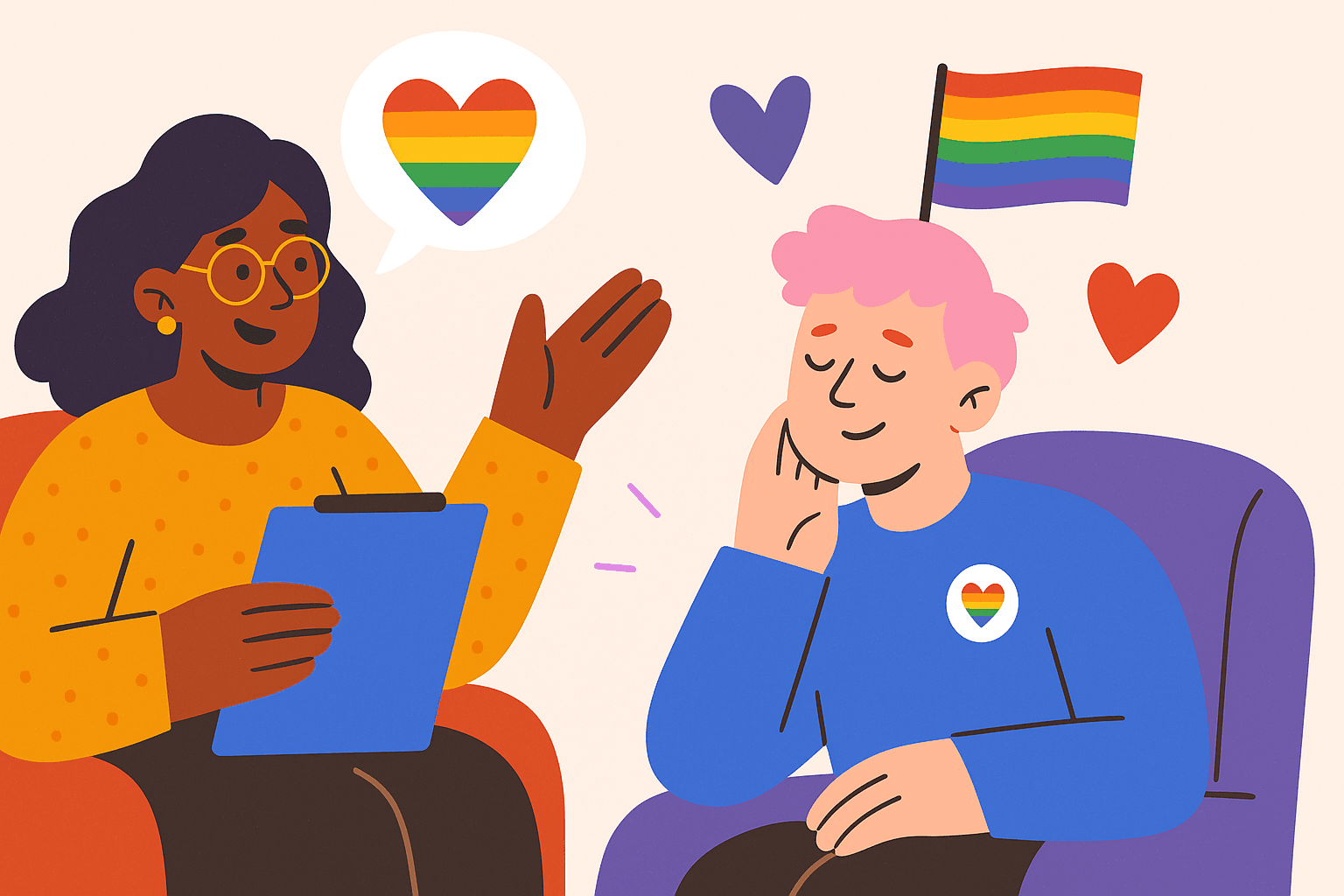
Look, let’s be real: finding a therapist is hard enough without having to worry whether they’ll understand your experience as an LGBTQ person. Or worse, whether they’ll try to “fix” you. Unfortunately, that’s not paranoia – conversion therapy is still legal in many places, and even well-meaning therapists can cause harm when they don’t understand LGBTQ issues.
The good news? There are genuinely supportive, knowledgeable therapists out there. You just need to know what to look for and what questions to ask. This isn’t about finding someone who’ll just nod along – it’s about finding someone who actually gets it and can help you work through your stuff without making your identity part of the problem.
Why Finding the Right Therapist Actually Matters
You might think, “Can’t any good therapist work with anyone?” In theory, sure. In practice? Not really. A therapist who hasn’t done the work to understand LGBTQ experiences might:
- Spend your session time getting educated instead of helping you
- Miss how discrimination and minority stress affect your mental health
- Not understand the specific challenges of coming out, transitioning, or navigating queer relationships
- Have unconscious biases that make you feel judged or misunderstood
You’re paying for therapy. You shouldn’t have to spend that time teaching your therapist about basic LGBTQ terminology or defending your identity. Your session should be about you and your actual concerns – whether that’s anxiety, relationship issues, career stress, or anything else.
Where to Actually Look for LGBTQ-Friendly Therapists
Online Directories
Psychology Today has a therapist directory where you can filter by “gay,” “lesbian,” “transgender,” and other LGBTQ-related specialties. It’s not perfect – some therapists check those boxes without real expertise – but it’s a decent starting point. You can read their profiles, see their approach, and often schedule directly.
The National Queer and Trans Therapists of Color Network (NQTTCN) specifically lists therapists who work with queer and trans people of color. If you’re looking for someone who understands intersectional experiences, this is a solid resource.
LGBTQ Centers and Organizations
Most major cities have LGBTQ community centers that maintain referral lists of friendly therapists. These lists usually come from community vetting, which means other LGBTQ people have actually worked with these therapists and recommended them. Call or check their website – many also offer sliding scale therapy options.
Community Recommendations
Ask around. Post in local LGBTQ Facebook groups, subreddits like r/askgaybros or r/actuallesbians, or Discord servers. People are usually happy to share who helped them. Just remember that a great therapist for someone else might not click with you – personality matters.
Professional Organizations
The Association of LGBTQ+ Psychiatrists and the World Professional Association for Transgender Health (WPATH) have provider directories. If you’re specifically looking for someone experienced with gender dysphoria or trans healthcare, WPATH providers have specialized training.
Ask Your Doctor or Current Healthcare Providers
If you have a primary care doctor or any healthcare provider who you know is LGBTQ-friendly, ask them for referrals. They often know mental health professionals in their network.
Red Flags That Should Make You Run
Some warning signs are obvious. Some are subtle. Here’s what should immediately set off alarm bells:
They mention “treating” or “healing” your sexual orientation or gender identity. Full stop. This is conversion therapy, and it’s harmful. Doesn’t matter how they dress it up – “helping you explore,” “giving you options,” whatever. No legitimate therapist tries to change your orientation or gender identity.
They ask invasive questions about your sex life without clinical reason. Yes, sex might come up in therapy. But if they’re asking detailed, graphic questions that feel voyeuristic rather than therapeutic, that’s not okay. You should never feel like your therapist is curious about LGBTQ people as a novelty.
They focus heavily on religious or moral frameworks. If their website or first conversation emphasizes their religious beliefs or “Biblical counseling,” and you’re not specifically looking for faith-based therapy, move on. Even religious LGBTQ people often find secular therapy more helpful for identity-related issues.
They don’t know basic terminology. If you say you’re non-binary and they look confused, or they keep using the wrong pronouns after you’ve corrected them, they’re not qualified to help you. You’re not their learning experience.
They attribute all your problems to being LGBTQ. Depressed? Must be because you’re gay. Anxiety? Must be your gender identity. This is lazy and harmful. LGBTQ people have the same range of mental health issues as everyone else, and good therapists understand that.
They make you feel defensive. Therapy should be a safe space. If you find yourself constantly having to justify your identity or choices, something’s wrong.
Questions to Ask During Your First Session
Most therapists offer a free or reduced-cost initial consultation. Use this time to interview them. Here are specific questions to ask:
“What’s your experience working with LGBTQ clients?”
Look for specifics. “I’ve worked with several gay clients” is different from “About 30% of my practice is LGBTQ clients, including people who are transitioning, navigating coming out, and dealing with discrimination.” More experience usually means better understanding.
“What’s your approach to working with LGBTQ issues?”
They should talk about affirming therapy, understanding minority stress, and treating your identity as a natural part of who you are – not something to explore the “causes” of.
“Have you had specific training in LGBTQ mental health?”
Good answers include workshops, continuing education courses, supervision with LGBTQ-specialized supervisors, or membership in LGBTQ professional organizations. Self-education counts, but formal training is better.
“What do you think about conversion therapy?”
There’s only one right answer here: it’s harmful, unethical, and not supported by any legitimate mental health organization. If they hem and haw or say anything like “it depends” or “if that’s what the client wants,” end the session.
For trans and non-binary folks: “What’s your experience with gender-affirming care?”
Do they understand the difference between gender identity and sexual orientation? Can they write letters for hormone therapy or surgery if needed? Do they approach gender questioning with curiosity rather than gatekeeping?
“How do you handle pronouns and chosen names?”
They should use whatever pronouns and name you provide, consistently, without making a big deal about it. If they slip up, they should correct themselves quickly and move on – not make you comfort them about it.
“Do you understand how discrimination and minority stress affect mental health?”
They should absolutely know what minority stress is. It’s not just external discrimination – it’s also internalized homophobia/transphobia, hiding your identity, and hypervigilance. This framework should inform how they work with you.
Evaluating How You Feel After the First Session
So you’ve had your first meeting. How do you know if it’s a good fit? Here’s what to pay attention to:
Did you feel heard? Not just “they listened,” but did they actually understand what you were saying? Could they reflect back your concerns accurately?
Did you feel comfortable? You might feel vulnerable – that’s normal in therapy. But did you feel safe being vulnerable? There’s a difference.
How much did you have to explain? Having to briefly clarify something is fine. Having to spend 20 minutes explaining basic concepts about your identity means they’re not prepared to work with you.
Did they make assumptions? Good therapists ask rather than assume. If they assumed things about your relationships, your family dynamics, or your experiences based on stereotypes, that’s a problem.
Did they use your correct pronouns and name consistently? This should be a baseline, not something they get credit for.
Do they seem genuinely interested in your growth? Or do they seem more interested in your identity as an interesting case study?
Was the power dynamic appropriate? You should feel like you’re collaborating, not being talked down to or over-protected.
Trust your gut. If something felt off, it probably was. You don’t need to be able to articulate exactly what was wrong. “This doesn’t feel right” is enough.
When Therapy Isn’t Working Out
Here’s something they don’t tell you enough: it’s completely normal to not click with your first therapist. Or your second. Finding the right fit can take time, and that doesn’t mean there’s anything wrong with you.
Signs it’s time to move on:
- You’re not making progress after several sessions (unless you’re working through particularly deep trauma, which takes time)
- You dread sessions instead of finding them helpful
- You don’t feel comfortable being honest with your therapist
- They’re not respecting your identity or boundaries
- You’ve brought up concerns and they haven’t changed their approach
- Your gut just says this isn’t it
How to end it:
You can be direct: “I don’t think this is the right fit for me, and I’ve decided to look for a different therapist.” You don’t owe them a detailed explanation. If you want to give feedback, you can, but you’re not required to educate them or manage their feelings about it.
Some therapists will ask if you want a referral to someone else. If you trust their judgment, take it. If not, just say you’ll handle it yourself.
Don’t let one bad experience stop you. A lot of people have a rough first therapy experience and give up. That sucks because therapy can genuinely help when you find the right person. Think of it like dating – not every first date is going to be great, but that doesn’t mean you should give up on finding a partner.
Therapy as a Tool, Not a Magic Fix
Let’s end with some real talk: therapy isn’t going to solve everything. It’s not going to make discrimination go away or fix every problem in your life. What it can do is give you tools to handle challenges, help you process difficult experiences, and support you in building the life you want.
A good LGBTQ-friendly therapist will help you navigate coming out (if you want to), deal with family rejection, process trauma, manage anxiety or depression, work through relationship issues, explore your gender identity, handle work stress, or whatever else you’re dealing with. They’ll do this while understanding that your LGBTQ identity is part of who you are, not a problem to solve.
You deserve support. You deserve someone who gets it. And you deserve to be picky about who you work with. Don’t settle for someone who makes you feel bad or doesn’t understand your experience. Keep looking until you find someone who helps you feel more like yourself.
The right therapist is out there. And once you find them, it can make a real difference.

James Wilson
James Wilson holds a Ph.D. in Psychology from Columbia University, where he specializes in human sexuality research. With 12 years of clinical experience counseling individuals exploring their sexual orientation, he has authored two books on sexual identity development. Dr. Wilson serves on the board of the American Psychological Association's Division 44 and frequently conducts workshops for healthcare providers on culturally competent care for LGBTQ+ individuals.