06.11.25
How to Be an Ally: Actual Actions, Not Just Words
Last Updated 14.10.25
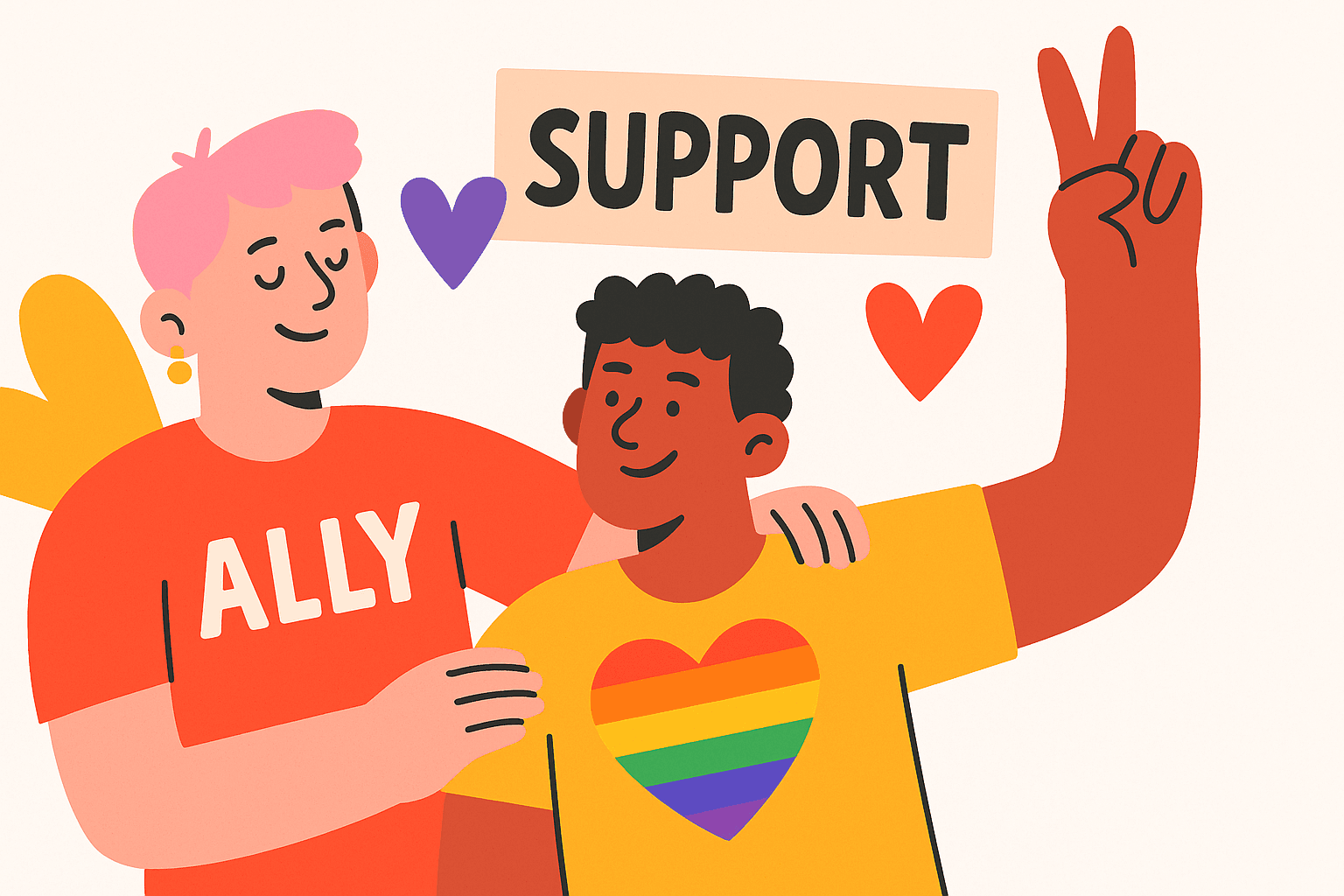
Let’s be honest: every June, your social media fills up with rainbow logos. Corporations post pride flags. Your straight friends share inclusive memes. Then July hits, and suddenly everyone’s moved on to complaining about summer heat. That’s not allyship – that’s performative nonsense, and LGBTQ+ people can spot it from a mile away.
Real allyship isn’t about feeling good about yourself or collecting progressive points. It’s about doing the actual work, even when nobody’s watching, even when it’s uncomfortable, even when you mess up. So let’s talk about what that actually looks like.
The Fake Ally Problem
Before we get into what to do, let’s address what not to do. Fake allies are everywhere, and they cause more damage than people who are openly hostile because at least with bigots, you know where you stand.
The “I Have Gay Friends” Person: They mention their LGBTQ+ friends constantly to prove their credentials but go silent when those friends face discrimination. They want the social capital without the work.
The Praise Seeker: They do one basic decent thing – like using someone’s correct pronouns – and expect a medal. Newsflash: doing the bare minimum of treating people with respect isn’t heroic.
The Centering Expert: They make every LGBTQ+ issue about themselves. “This must be so hard for you, but let me tell you how it makes ME feel.” Or worse, they speak over LGBTQ+ people in conversations about LGBTQ+ issues.
The Defensive One: The moment someone corrects them or points out they’ve messed up, they spiral into “I’m not homophobic/transphobic! How dare you!” Rather than just apologizing and learning.
If you recognized yourself in any of these, don’t panic – recognizing the problem is the first step. Now let’s talk about actual allyship.
Supporting in Conversation: Shut Up and Listen
This sounds simple, but it’s where most people fail. When an LGBTQ+ person is talking about their experiences, your job is to listen – not to compare it to that time you felt excluded, not to play devil’s advocate, not to explain why some homophobia is “understandable.”
Here’s what this looks like in practice:
At a family dinner, your cousin makes a joke about “men in dresses.” Don’t laugh nervously and change the subject. Say something. “That’s not funny. Trans women are women, and mocking them isn’t okay.” Yes, it’ll be awkward. Yes, your aunt might get defensive. Do it anyway.
When your LGBTQ+ friend is talking about workplace discrimination, don’t immediately jump to solutions or “well actually” statements. Ask questions. “What would be helpful for you right now?” Sometimes people need to vent, not solve.
In group conversations, amplify LGBTQ+ voices. If someone makes a good point that gets talked over, bring it back: “Actually, I want to hear what Marcus was saying about…”
Pronouns: It’s Not That Complicated
Using someone’s correct pronouns is basic respect, not a political statement. If you mess up, correct yourself quickly and move on. Don’t make a big deal out of it – “Oh my god, I’m so sorry, I’m terrible at this, I really support you, I just…” is worse than “She – sorry, he – was saying…” and continuing the conversation.
Practice using they/them pronouns for people even when they’re not around. It builds the habit. If you’re cisgender, normalize sharing your pronouns in introductions and email signatures. It takes the pressure off trans and non-binary people to always be the ones explaining.
And please, stop asking about someone’s pronouns in front of a crowd if they’re not out. Pull them aside if you need to check, or use they/them until they tell you otherwise.
Intervening: The Uncomfortable Part
This is where allyship gets real. Seeing discrimination happen and doing nothing makes you complicit, even if you “support LGBTQ+ rights” in theory.
At work: Your colleague deadnames a trans coworker. Correct them immediately. “It’s James now.” If they persist, that’s an HR issue – and yes, you should report it even if James doesn’t want to make waves. Discrimination is everyone’s problem.
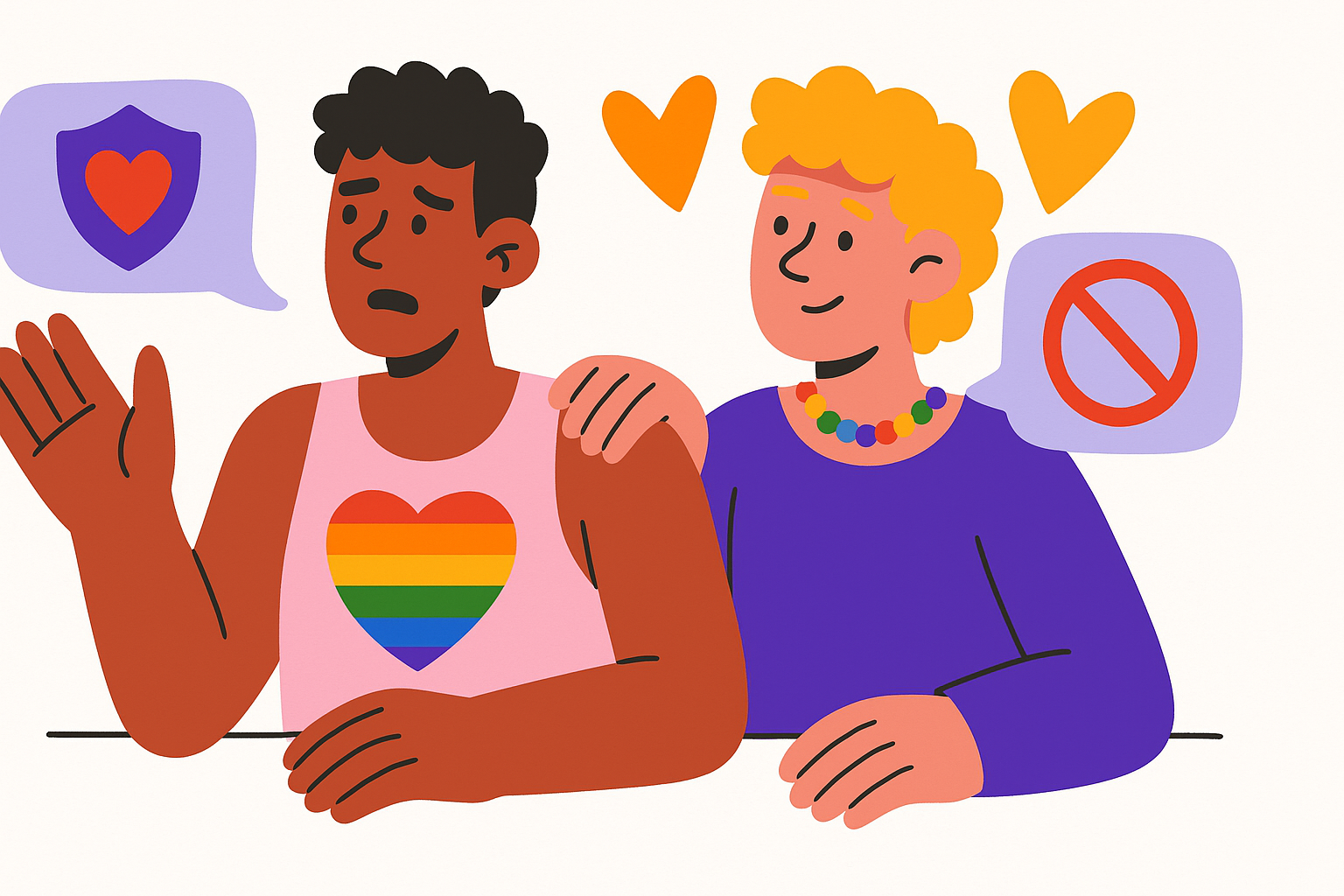
In public: Someone’s harassing a gay couple on the street. Your safety comes first – don’t put yourself in danger – but you can create a distraction, ask the couple if they need help, or call the police if it escalates. Sometimes just having a witness makes harassers back off.
Online: Your friend shares a transphobic meme. Don’t like and scroll. Comment or DM them. Silence is agreement. And no, “it’s just a joke” isn’t an excuse – jokes that mock marginalized people aren’t funny.
The key is: don’t wait for the LGBTQ+ person to defend themselves. They’re tired. They’ve been defending themselves their whole lives. You step in.
Put Your Money Where Your Mouth Is
Posting pride flags is free. Actually supporting LGBTQ+ organizations costs something – time, money, or both.
Donate to LGBTQ+ organizations doing real work. The Trevor Project provides crisis intervention for LGBTQ+ youth. Lambda Legal fights for LGBTQ+ rights in court. Local LGBTQ+ centers need funding for community programs, especially in conservative areas where they’re under attack.
Can’t donate? Volunteer. LGBTQ+ centers need people to staff hotlines, organize events, do administrative work. Pride events need marshals, setup crews, cleanup volunteers. Homeless shelters that serve LGBTQ+ youth need support – and LGBTQ+ youth are disproportionately homeless because their families reject them.
Support LGBTQ+ businesses and creators. Buy books by LGBTQ+ authors. Hire LGBTQ+ owned businesses. Follow LGBTQ+ artists and actually pay for their work instead of just sharing it for exposure.
Educate Yourself: Do the Homework
LGBTQ+ people are not your personal Google. Yes, they can recommend resources, but expecting them to explain every concept and answer every question is exhausting. Do your own research.
Books: “The ABC’s of LGBT+” by Ashley Mardell covers basics. “Sissy” by Jacob Tobia and “Redefining Realness” by Janet Mock are powerful memoirs. “Gender Queer” by Maia Kobabe – you know, the one conservatives keep trying to ban – is excellent.
Documentaries: “Disclosure” on Netflix examines trans representation in media. “The Death and Life of Marsha P. Johnson” covers a pivotal figure in LGBTQ+ history. “Pride” (2014) shows working-class solidarity during the AIDS crisis.
Follow LGBTQ+ creators: On social media, follow actual LGBTQ+ people talking about their lives and issues. Not influencers performing queerness for straight audiences – real people. Listen to what they’re saying about legislation, discrimination, culture.
Learn the history: The Stonewall Riots, the AIDS crisis, the fight for marriage equality – these aren’t ancient history. Many LGBTQ+ elders lived through these events. Understanding the context of current issues requires knowing what came before.
And when you learn something new, don’t immediately perform your newfound knowledge. Internalize it, apply it, let it change your behavior.
Online vs. Offline: Different Arenas, Same Principles
Online allyship is easier – you can share resources, call out bigotry, and boost LGBTQ+ voices with a few clicks. But it only matters if you’re doing the offline work too.
Online: Report hate speech. Don’t just scroll past violent or harassing comments – use the report function. Platforms are terrible at moderation, but mass reports can make a difference. Share GoFundMes for LGBTQ+ people facing hardship. Amplify LGBTQ+ voices, especially during legislative attacks on LGBTQ+ rights.
But online activism without offline action is hollow. Tweeting “love is love” while voting for politicians who oppose LGBTQ+ rights makes you part of the problem.
Offline: Show up to protests and rallies, even when it’s not pride month. Attend school board meetings when they’re trying to ban LGBTQ+ books or target trans kids. Vote – local elections especially – for candidates who actually support LGBTQ+ rights with their policies, not just their words.
Be visible as an ally in spaces where LGBTQ+ people might not feel safe. Wearing a pride pin in a conservative workplace signals to closeted colleagues that you’re safe to talk to. A rainbow sticker on your car in a small town tells LGBTQ+ people they’re not alone.
You’re Going to Mess Up
Here’s the truth: you will get things wrong. You’ll use the wrong term. You’ll say something ignorant. You’ll accidentally center yourself when you should be listening. That’s part of the process.
What matters is what you do next. Apologize sincerely – “I’m sorry, I was wrong” – without making excuses or centering your hurt feelings. Learn from it. Don’t do it again. And absolutely don’t make the person you hurt comfort you about your mistake.
If someone calls you out, resist the urge to get defensive. “I’m a good person” isn’t relevant. Good people do harmful things all the time. Listen to the criticism, sit with the discomfort, and do better.
And don’t give up just because you messed up. That’s the coward’s way out – “I tried to be an ally but I got criticized so I quit.” LGBTQ+ people don’t get to quit dealing with discrimination, and you don’t get to quit supporting them because your feelings got hurt.
Allyship Is a Verb, Not a Noun
You’re not “an ally” – some static identity you achieve and then coast on. You’re “being an ally” – an ongoing practice that requires constant work, education, and willingness to be uncomfortable.
It means prioritizing LGBTQ+ people’s safety and rights over your own comfort. It means amplifying voices instead of speaking over them. It means showing up consistently, not just when it’s convenient or popular.
Real allyship happens in the unrecorded moments: defending someone at a family dinner where no one will praise you for it, donating to LGBTQ+ organizations anonymously, correcting your own parent’s homophobia even though it’s easier to let it slide, voting for LGBTQ+ rights even in elections where nobody’s watching.
The LGBTQ+ community doesn’t need saviors or performative supporters. We need people who will do the actual work – messy, uncomfortable, ongoing work – of creating a world where LGBTQ+ people can exist safely.
So stop talking about being an ally and start doing it. The community is watching, and we know the difference.

Elena Rodriguez
Elena Rodriguez earned her Ph.D. in Sociology from NYU, focusing on relationship structures and romantic attraction patterns across diverse populations. She directs the Center for Relationship Studies at Stanford University and has pioneered research on aromantic, demiromantic, and other romantic orientations. Dr. Rodriguez regularly contributes to relationship education programs and has developed curriculum materials used in universities nationwide to help students understand the spectrum of romantic experiences.