
12.08.25
Am I Agender Quiz: Neither Here Nor There?
Last Updated 22.01.26
○ DISCLAIMER
This quiz is for entertainment only and cannot determine your sexuality or gender identity. It is not a diagnostic tool and shouldn't guide major life decisions. For genuine support with identity questions, please consult qualified LGBTQ+-friendly professionals. Your self-discovery journey is uniquely yours.
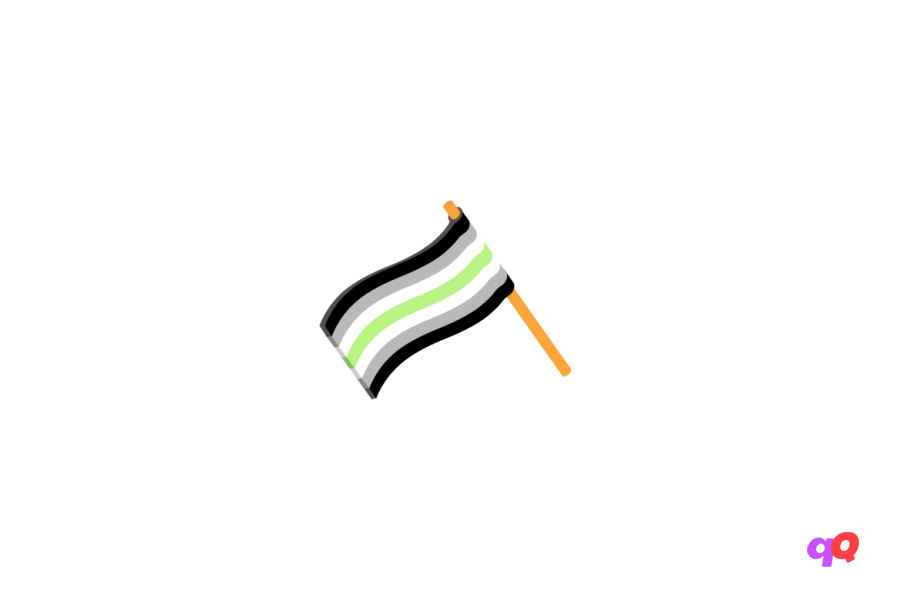
Agender identity is characterized by the absence of an internal sense of belonging to any gender. It’s not a phase or an attempt to be special – it’s an innate sense of self where gender simply isn’t part of your identity. Some agender people describe it as “gendervoid,” a liberating absence of what others consider integral to who they are. If you’ve questioned whether you experience gender at all, this agender quiz can provide structured questions for self-reflection.
All agender people are technically non-binary, but not all non-binary people are agender. While genderfluid people experience changing gender or demigender people feel partial connection to a gender, agender individuals don’t experience gender at all. Key experiences the quiz explores include absence of internal gender feeling (not knowing what it means to “feel like” a man or woman), discomfort with gender categorization, alienation from gender roles, and feeling like you’re “playing a role” when conforming to gender norms.
Living outside the gender binary presents challenges from social invisibility to language barriers, but the agender community is growing. Take this quiz as a tool for honest self-exploration and understanding your unique identity.
Questions Overview
1. When people use gendered pronouns for you, you feel:
- All pronouns feel equally unsuitable
- I prefer they/them, but sometimes accept others
- Some pronouns feel more right than others
- Certain pronouns feel natural
2. How do you feel about gender-segregated changing rooms/bathrooms?
- Feel discomfort from having to choose
- Prefer gender-neutral options
- Sometimes experience awkwardness
- Don't experience discomfort
3. When you hear 'gender roles in relationships,' you think:
- It's a completely meaningless concept to me
- I try to avoid any gender expectations
- Some roles feel natural
- I understand and accept these roles
4. When choosing a character in video games, you:
- Always look for the most neutral option
- Experiment with different options
- Sometimes choose a specific gender
- Consistently choose one gender
5. How do you react to the question 'Do you feel like a man or a woman?':
- This question has no meaning for me
- Hard to answer, rather neither
- Partially relate to one option
- Can clearly define
6. When thinking about your future, you:
- Don't see yourself in any gender expression
- Imagine yourself as maximally neutral
- Allow for some gender aspects
- Clearly see yourself in a specific role
7. How often do you think about your gender identity?
- Never, it's not part of my self-perception
- Often explore this question
- Periodically reflect on it
- Rarely, I have a clear understanding
8. When shopping for clothes, you feel:
- Discomfort from gender-divided departments
- Prefer unisex sections
- Can choose from different departments
- Comfortable in a specific department
9. What's your attitude toward gender transition?
- Don't see the point as I don't feel gender at all
- Interested in non-gender aspects
- Consider partial changes
- Have a clear opinion
10. How do you react to gender-specific compliments?
- They cause internal dissonance
- Prefer gender-neutral ones
- Some are pleasant, some aren't
- Accept them naturally
11. How do you feel when required to indicate gender on forms?
- Complete rejection of this question
- Wish for a 'prefer not to say' option
- Depends on the situation
- Mark without hesitation
12. In childhood, you:
- Didn't understand the division of boys'/girls' games
- Actively resisted gender stereotypes
- Sometimes followed gender expectations
- Naturally followed expectations
13. How do you feel about gender-neutral names?
- It's the only comfortable option for me
- Actively interested in such options
- Consider them as one of the options
- Prefer traditional names
14. In relationships, you:
- Avoid any gender roles and expectations
- Strive for maximally neutral relationships
- Allow some gender aspects
- Comfortable with traditional roles
15. Your attitude toward gender-marketed cosmetics:
- Consider the division absurd
- Choose neutral products
- Sometimes use gendered cosmetics
- Prefer a specific line
16. When meeting new people, you:
- Feel discomfort from gender assumptions
- Immediately clarify your neutral position
- Sometimes accept assumptions
- Comfortable with assumptions
17. In terms of gender expression, you:
- Strive for complete neutrality
- Experiment with neutrality
- Combine different elements
- Maintain a specific style
18. Your attitude toward gendered celebrations (bachelor/bachelorette parties):
- Completely reject such formats
- Prefer joint celebrations
- Participate with reservations
- Actively participate

Michael Chen
Michael Chen completed his Ph.D. in Gender Studies at Yale University and now leads transgender health initiatives at Boston Medical Center. His research on gender identity development has been featured in leading medical journals and informed policy development for transgender healthcare access. Dr. Chen draws from his academic expertise to create educational content that promotes understanding of diverse gender expressions and identities.
I got strongly Agender which makes sense I just took this quiz just to make sure that I was And I was correct.
I got “strongly agender” which makes sense since I am actually agender lol
I got exploring agender but I feel like I’m non binary RAHH SO CONFUSING
I also got demi-gender, but idk if I’m just demi-girl or nonbianary :/
Im agirl which means im agender but i allow ppl to think im a girl
I rlly dgaf what ppl use They/them she/her he/him or even it/its for me so’s likeee….
I uh iuh heh got demigender and uhmm I’m transmasc xp
HAHA! literally got the same, but I truly don’t and have never felt fully like a man, but I do learn towards more “masculine” things though I really strive to be completely neutral.
I got demi-gender as a questioning person//
Ooo me too (i did this for fun, i am transmasc usually)
me too
yeah that about checks out. I knew I definitely was on some sort of agender spectrum. pretty accurate tbh
Bro I didn’t know if I was genderfluid or nonbinary bc I was forcing myself to be a gender but I didn’t even know if a gender would be right for me, so I guess I am agender?..
i personally think i’m agender because my gender isn’t what makes me who i am. i’m afab, and i like doing some feminine things but liking those things isn’t a reflection of my gender. i’m fine with identifying as a girl as far as my family knows, but i don’t see myself as girl, i don’t really see myself as any gender. i think identifying as agender is really freeing for me because it gives meaning to this feeling of an absence of gender and the disconnect from gender feelings. it kind of feels like i can have a gender now and it feels amazing, i found this amazing community who feels like me.
Same, it’s amazing isn’t it 🙂
what the f*ck is exploring agender help
I think its like seeing labels on the agender spectrum and seeing which is right for you?
I knew I wasn’t a male!
idk ive been trying to tell myself i might be nonbinary bc i didnt feel like a girl or a boy but nonbinary doesnt rlly fit either it js feels wierd to be called by any gender so this might make some sense idk
i also got strongly agender so that might be saying something
I’m exploring agender
I guess
HAH! KNEW IT!!
I think I’m having an agender day today (I’m genderfluid) because I usually feel an indication of how I wanna present my gender when I get dressed in the morning but today I feel nothing
Idk anymore if I’m agender AND nonbinary or just agender of just nonbinary-like cmon 😭😭
Hey, you don’t have to listen to me, but Ima tell you right now that all agender ppl are technically nonbinary, as we all fall outside of the perceived ‘norm’, or, gender binary. Hope this helped!!
I got strongly agender and idk how I feel about it I can’t tell if I am happy or already knew it. The only thing I know for sure is I’m confused… like VERY confused. I mean come on man I just figured out I’m pan and then the voices in my head said “oh you think you can get away well surprise you have to figure out your gender now!” I MEAN I AM TIERED OF THIS CRAP… anyway I’m just confused.
I took the test and got strongly agender. There was one question I wasn’t sure about so I retook it, only changing one answer, and I got demigender. I don’t know anymore 😭😭😭😭😭😭😭😭😭😭
Huh, so I guess for most people gender is a weirdly integral part of how they view and conceptualize themselves and others?
Judging by all the people I see freaking out over various gender related issues in every way imaginable, it seems like quite a bothersome, painful, confusing, and unnecessary collection of culturally shared and stifling gender stereotypes and behavioral expectations to so deeply internalize and for society as a whole to care so much about.
It all seems somewhat superfluous and meaningless to me, but I guess this is the norm and I am the odd one out for not really caring about or experiencing this stuff the same way others seem to.
So when other people look inward and think about themselves, one of the more important aspects of their self identity is whether they are a man or woman?
It gave me exploring agender… F**k I HAVE BEEN SEARCHING FOR THE RIGHT AND THE MOST RELATEABLE GENDER TO WHO AND HOW I FEEL! FOR OVER 8 YEARS. WHY DOES IT SAY I AM STILL EXPLORING! I CAN’T STOP SEARCHING FOR THE TRUE GENDER I AM. I HAVE DONE WAY TOO MUCH EXPLORING!
I knew it
whoag idk if I’m agender or just like,,,, don’t care, or just questioning bc right now that is what I am. idek at this point I’m just done with trying to rush into labels
I think I’m just confused…
(And I don’t mean that in the “you’re not queer you’re just confused” sense, more so the “what the f*ck even am I?” Sense)
It’s official, I’m enby AND agender, it’s my choice and I don’t care what anyone says, I AM BOTH
I didn’t even think of that can I join
I’m JOINING!!!!!!!
reallllll man!!!!
I dunno anymore man
I KNEW IT