06.11.25
Coping with Family Homophobia and Transphobia: A Practical Guide
Last Updated 14.10.25
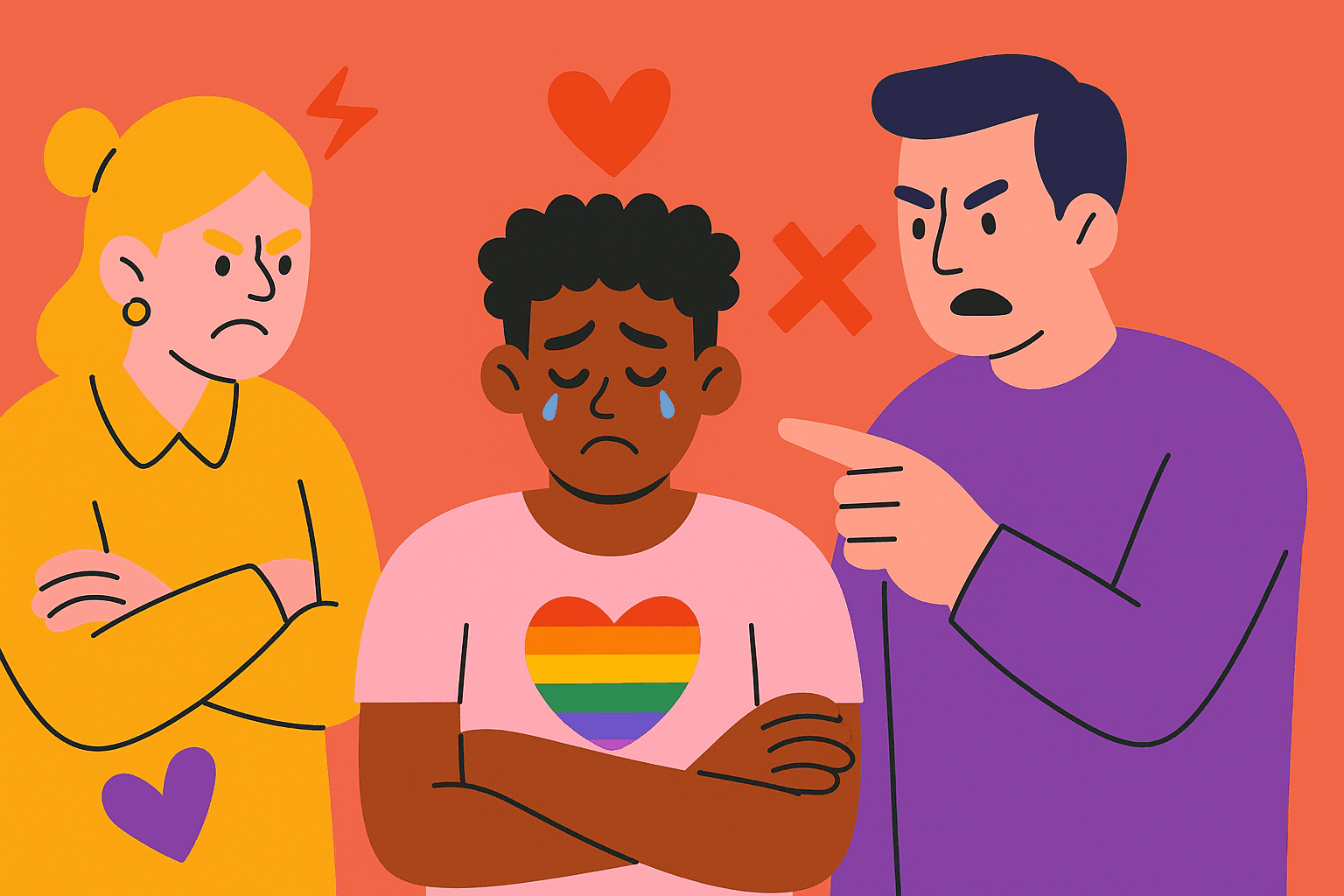
Here’s the thing nobody wants to admit: getting slurs thrown at you by strangers online hurts, but it’s nothing compared to hearing your mom call you “confused” or your dad refuse to use your pronouns. Family rejection cuts deeper because these are the people who’ve known you since birth, who supposedly love you unconditionally. When that love comes with terms and conditions based on your identity, it creates a special kind of pain that sits in your chest like a stone.
The statistics back this up, though you probably don’t need numbers to tell you what you already know. LGBTQ+ youth facing family rejection are 8 times more likely to attempt suicide and 6 times more likely to experience severe depression. Family acceptance isn’t just about feeling warm and fuzzy—it’s literally about survival.
But here’s what we’re going to do: give you actual tools to handle this situation. Not platitudes about “it gets better” or advice to “just educate them.” Real strategies for protecting yourself, communicating when possible, and knowing when to walk away.
First Steps: Assess Your Risk Level Before You Do Anything
Before you start practicing comeback lines or planning heart-to-heart conversations, you need to figure out what you’re actually dealing with. Not all family homophobia looks the same, and your strategy depends heavily on your specific situation.
Physical safety check:
- Have family members been physically aggressive before (about anything, not just LGBTQ+ issues)?
- Do you live in a place where conversion therapy is legal and they’ve mentioned it?
- Are you financially dependent on them?
- Are you a minor with no alternative housing options?
If you answered yes to these questions, your priority isn’t changing minds—it’s keeping yourself safe. That might mean staying closeted longer, making an escape plan, or reaching out to organizations that help LGBTQ+ youth in crisis.
Emotional safety assessment:
- Do conversations escalate to screaming?
- Do they use your identity as a weapon during unrelated arguments?
- Have they threatened to cut you off financially or kick you out?
- Do they out you to others without permission or share private information to shame you?
These behaviors indicate different levels of toxicity. Parents who are ignorant but willing to learn are different from parents who actively want to hurt you. You need to know which one you’re dealing with.
Financial reality check: If you’re on their health insurance, phone plan, or they’re paying for your education, this affects your options. It sucks, but sometimes survival means playing it strategic until you’re independent. There’s no shame in protecting your access to healthcare or education while you build your exit plan.
Communication Methods: What to Say When They Say Awful Things
Let’s get specific about phrases you’ll actually hear and how to respond without losing your mind or your dignity.
When they say: “This is just a phase” or “You’re too young to know” You can respond: “I understand this is new information for you, but I’ve known this about myself for [timeframe]. I’m not asking for your approval—I’m telling you who I am.”
This response is firm without being defensive. You’re stating facts, not opening a debate.
When they say: “We didn’t raise you like this” or “Where did we go wrong?” You can respond: “My identity isn’t a reflection of your parenting. You raised me to be honest and authentic, and that’s what I’m doing.”
Flip the script. They want to frame your identity as their failure; redirect it as their success in raising someone brave enough to be themselves.
When they bring up religion: You can respond: “I respect that your faith is important to you. My relationship with [higher power/spirituality/values] is personal to me. We may interpret things differently.”
You don’t have to win theological debates. You’re not obligated to argue scripture with them, especially when they’ve already decided what they believe.
For repeated misgendering or deadnaming: You can respond: “My name is [name]. I need you to use it.” Then pause. Don’t fill the silence. Make them sit with their choice to continue disrespecting you.
If they keep doing it, you can add: “I notice you’re choosing not to use my name/pronouns. That tells me you’re choosing not to respect me. I’ll need to limit our contact until that changes.”
The broken record technique: When they keep pushing the same argument, you don’t need new counterarguments. Pick one phrase and repeat it: “I’ve heard your perspective. My answer hasn’t changed.” Say it calmly, every time. This stops you from getting pulled into circular arguments that go nowhere.
Psychological Protection: Tools That Actually Work
When you’re in a hostile environment, you need immediate coping strategies that don’t require a therapist’s office or perfect circumstances.
Grounding techniques for heated moments: The 5-4-3-2-1 method isn’t pseudoscience—it works by interrupting your anxiety response. When you feel your heart racing or panic building:
- Name 5 things you can see
- 4 things you can touch
- 3 things you can hear
- 2 things you can smell
- 1 thing you can taste
This forces your brain to focus on sensory input instead of spiraling. Do it silently during dinner table arguments or right after difficult conversations.
Box breathing for physiological calm: Breathe in for 4 counts, hold for 4, breathe out for 4, hold for 4. Repeat 4 times. This actually changes your nervous system response—it’s not just about “relaxing,” it’s about interrupting your fight-or-flight response on a biological level.
Journaling that serves a purpose: Don’t just write “I feel sad.” Track specific incidents:
- What was said
- How you responded
- What you wish you’d said
- Patterns you’re noticing
This documentation serves two purposes: it helps you process, and it gives you a record if you need to explain to others why you’re setting boundaries or cutting contact.
Reality testing: When you’re told constantly that you’re wrong, broken, or sinful, you start to internalize it. Write down affirmations based on facts: “I am [age] years old and capable of knowing my own identity.” “Other people’s discomfort with my identity is not my responsibility.” Read these when you’re doubting yourself.
Create a exit strategy for conversations: Decide in advance when you’ll leave the room. “If they raise their voice, I leave.” “If they start insulting my partner, I leave.” “If they threaten me, I leave.” Having predetermined boundaries makes it easier to enforce them in the moment.
Finding Support Outside Your Family
Your family isn’t your only option for connection, even though it might feel that way when you’re stuck with them.
Online communities with caution: Platforms like Reddit’s r/LGBT or r/TransSupport can provide immediate connection, but remember—online advice isn’t therapy and internet strangers don’t know your full situation. Use these spaces for validation and ideas, not as your only support system.
LGBTQ+ organizations and hotlines:
- The Trevor Project (1-866-488-7386) for youth crisis support
- Trans Lifeline (1-877-565-8860) for trans-specific support
- PFLAG chapters for family-related issues
These aren’t just for emergencies. You can call to talk through situations or get advice.
School or workplace resources: If you’re in school, GSA clubs or LGBTQ+ resource centers exist for this reason. Many colleges have dedicated counselors for LGBTQ+ students. At work, ERGs (Employee Resource Groups) can provide community and sometimes practical resources.
Chosen family: This term gets thrown around a lot, but building actual supportive relationships takes time. Look for queer-friendly spaces in your area—community centers, bookstores, coffee shops with pride flags. Show up consistently. Relationships built on shared experience can become just as meaningful as blood family, but they require investment.
Therapy if you can access it: Look for therapists who specifically list LGBTQ+ competency. Psychology Today’s directory lets you filter by specialization. If you can’t afford traditional therapy, check if local LGBTQ+ organizations offer sliding scale counseling.
Red Flags: When You Need to Distance Yourself
Not every family situation can or should be salvaged. Some relationships are actively harmful, and protecting yourself means creating distance.
Clear indicators you need to limit or cut contact:
Violence or threats of violence: This is non-negotiable. If you’re being physically hurt or threatened, you need to get out. Contact local LGBTQ+ organizations for help with housing or safety planning.
Conversion therapy attempts: Whether it’s church-based programs or sending you to a “therapist” who promises to change your orientation, this is abuse. Many jurisdictions ban conversion therapy for minors, but enforcement varies. Document everything and reach out for legal help if needed.
Financial manipulation: “We’ll pay for college if you stay closeted” or “You can live here if you break up with your partner” are forms of coercion. If you have options, even difficult ones, they may be better than staying in a situation where your identity is being held hostage.
Outing you to others: If they’re telling extended family, your workplace, or your school about your identity without permission—especially in ways meant to shame or harm you—they’re violating your privacy and potentially putting you at risk.
Using your identity as a weapon: Bringing up your LGBTQ+ identity during unrelated arguments (“You’re irresponsible with money because you’re too focused on your trans stuff”) shows they see your identity as a character flaw to exploit.
Refusing to use your name or pronouns consistently: After repeated requests and reasonable time to adjust, continued misgendering isn’t an accident—it’s a choice to disrespect you.
Gaslighting: “You were never feminine/masculine as a child,” “You’re only gay because of that friend,” “You’re remembering things wrong”—these attempts to rewrite your history and reality are psychological abuse.
The “we’re just concerned” manipulation: Parents often frame their homophobia or transphobia as worry. “We’re just concerned about your future” or “We worry you’ll be unhappy” sounds caring, but if their “concern” involves trying to change your identity, it’s not concern—it’s control.
You Don’t Owe Them Your Mental Health
Here’s the conclusion people don’t want to hear: some families don’t come around. Some parents double down. Some siblings choose their bigotry over their relationship with you.
You can’t control their reactions, but you can control your boundaries. You can decide that your mental health matters more than maintaining a relationship with people who hurt you. You can choose to walk away, even temporarily, and that doesn’t make you a bad person or a failure.
The expectation that LGBTQ+ people should endure abuse in the name of “family” is itself homophobic and transphobic. You wouldn’t tell someone to maintain a relationship with a friend who constantly insulted them—family isn’t exempt from basic standards of decency.
Practical steps for distancing:
If you’re still living with them: make a plan. Save money, research roommate situations, look into emergency housing resources through LGBTQ+ organizations. Having a timeline helps you endure the present.
If you’re independent: you can set boundaries immediately. This might look like limited contact, supervised visits only, or complete cutoff. You can block phone numbers. You can skip holidays. You can build a life that doesn’t include people who refuse to respect you.
If you’re not ready for full cutoff: reduce contact gradually. Weekly calls become biweekly. Holiday visits become shorter. You don’t owe anyone an explanation beyond “This is what works for me right now.”
The guilt: You’ll probably feel guilty. We’re socialized to believe family is everything, that blood is thicker than water (the full quote is actually “the blood of the covenant is thicker than the water of the womb”—chosen relationships can matter more).
That guilt doesn’t mean you’re wrong. It means you’re a caring person stuck in an impossible situation. Feel the guilt, acknowledge it, and do what you need to do anyway.
Future possibilities: Maybe they’ll change. Some parents eventually come around after months or years of reflection, or after realizing they’re losing you. But you can’t wait for that while sacrificing your wellbeing. Protect yourself now. If they do the work to change, you can reassess then.
Your identity isn’t something you need to justify, defend, or negotiate. You exist. That’s enough. Anyone who makes your existence conditional isn’t providing love—they’re providing control.
Find your people. Build your life. Survive first, thrive when you can, and know that choosing yourself isn’t selfish. It’s necessary.